I was asked a very interesting question during the Writing Historical Fiction panel at Scotiacon last month: “Why do you write about the 18th century when gay persecution has existed throughout history?”
This is a very interesting point of discussion and I thought it was worth addressing.
Firstly, I studied Early Modern History at university, specifically the period from 1660 to 1720. This course had a strong European flavour, with my Masters dissertation being on Political Propaganda in the London Press from 1712 to 1716. Meanwhile, I wrote one of my essays on sodomy during the first decade of the 1700s, which details the early days of the molly houses.
It is true that gay people have suffered persecution throughout history but one of the worst periods in England was during the middle part of the 1720s. Molly houses weren’t new to London – they had been going for around 20 years by this point – but they started to capture the public’s imagination, as well as the attention of local law enforcers.
The formation of the Bank of England in 1694 and the expiration of the Licensing Act in 1695 paved the way for two modern things – capitalism and the free press as we know it. The former meant disposable income and the forming of early societies, while the freedom of the press enabled the advent of the tabloids, which were just as scurrilous as they are today.
Between 1724 and 1726, there was a massive witch hunt against gay people, or ‘Sodomites’ to use the language of the day. This was largely based on a gay man turned informant, who alerted the authorities to the various molly houses of London. Molly houses were early gay clubs – some, but not all, were brothels while most had a place for drinking and table games. Some molly houses permitted gay sex while others allowed men to dress as women. Think furry convention without the fursuits.
This was anathema to the conservative Society for the Protection of Manners. This had been formed in 1691, but again reached the peak of its powers in the 1720s. Raids on molly houses were frequent and the press fervently cheered them on. They ran regular reports of the raids and subsequent trials, while they also published anonymous letters and editorials urging for the expunging of Sodomites. One famous example called for the sterilization of all gay men.
By the end of 1726, justices realised this was starting to become a witch hunt and the trials ceased. However, the parallels with today are strong. Trans people in many countries, including the UK, face similar persecution, while gay people in many countries also still face such hostilities.
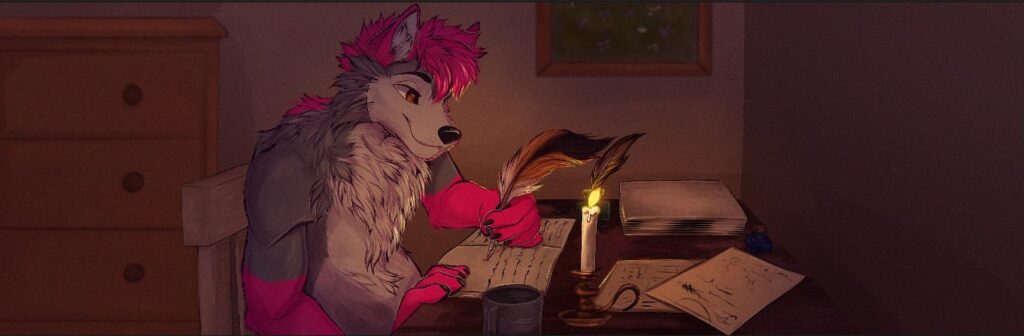
This is something I explore in ‘1725’ and ‘Back to the Molly House’, the two stories featuring Hooke and Rufford. Both of these stories, which follow on from each other, are fictitious tales based on real-world events. The dates are as accurate as research allows. I wrote these stories because I wanted to highlight the people who were accused, charged, pilloried, and in some cases hanged, simply for being who they were.
I don’t exclusively write about the 18th century, but it’s a period of history I have always found fascinating. I also find its echoes particularly strong with the world in which we are living today. Things did get better for gay people after 1726, but of course they remained hidden for many years. Even now, the persecution remains, but at least in many countries we can still be out and proud.
I have two novels in the works about Hooke and Rufford, which I am hoping to write in the coming years. In the meantime, you can read their stories in Happy Howlidays (1725) and The Wideness of the World (Back to the Molly House).